Friendly Rabbit: Bringing Playful Warmth to Modern Design Projects
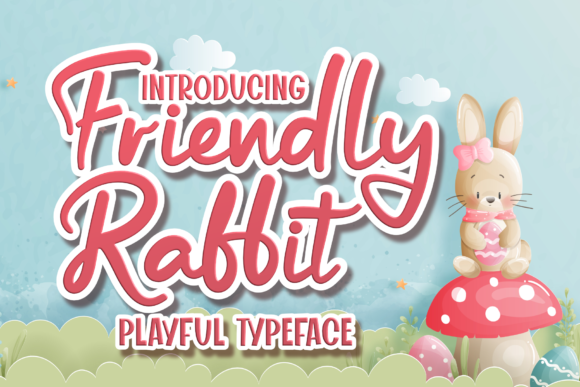
There is a specific moment in the creative process when you realize your design feels too cold. You have chosen clean sans-serifs for readability and structured layouts for professionalism, but the result lacks soul. It looks like a template rather than a conversation. This is often where designers, marketers, and small business owners hit a wall. They need a typeface that bridges the gap between legibility and personality without tipping into chaos. Enter Friendly Rabbit, a stylish and playful brushed handwritten font that solves this exact problem by injecting a lovely, approachable touch into digital and print media.
Unlike rigid geometric fonts that demand attention through size and weight, Friendly Rabbit invites the viewer in. It mimics the natural flow of a marker or brush pen, complete with subtle texture and organic curves. For adults aged 20 to 50 who are building brands, creating content, or designing educational materials, this font offers a rare combination: it is distinct enough to stand out, yet neutral enough to remain readable. It does not scream for attention; it whispers a welcome.
Why Handwritten Fonts Matter in a Digital World
We live in an era of algorithmic precision. Most of the interfaces we interact with daily are built on grid systems and standardized typography. While efficient, this uniformity can create emotional distance. When a brand or creator uses a handwritten style like Friendly Rabbit, they are signaling humanity. They are saying, "A real person made this."
This psychological cue is powerful. For entrepreneurs and freelancers, especially those in service-based industries, trust is the primary currency. A logo or header that feels hand-crafted suggests care and attention to detail. It lowers the barrier between the business and the customer. However, not all handwritten fonts are created equal. Many are illegible, overly decorative, or childish in a way that undermines professional credibility. Friendly Rabbit avoids these pitfalls. Its "brushed" aesthetic provides structure, ensuring that letters remain distinct even when the style is relaxed. This makes it a versatile tool for anyone looking to add warmth without sacrificing clarity.
Real-World Applications for Creators and Businesses
The true value of a typeface is revealed in its application. Friendly Rabbit is not just a decorative element; it is a functional design choice that can elevate various projects. Here is how different users can leverage this font in realistic scenarios.
Branding for Lifestyle and Wellness Companies
Consider a small business owner launching a line of organic skincare products or a local yoga studio. Their brand values likely include nature, calm, and authenticity. Using a stark, industrial font would contradict these values. Friendly Rabbit, with its soft edges and natural rhythm, aligns perfectly with this aesthetic. It works beautifully on packaging labels, where space is limited and personality is paramount. When a customer picks up a jar of cream and sees the product name written in a friendly, brush-style script, it feels artisanal and trustworthy. It suggests that the product was made with hands, not just machines.
Educational Materials and Children’s Content
Educators and publishers often struggle to find fonts that are engaging for children but not distracting. Friendly Rabbit is an amazing choice for children's games, workbook headers, and classroom posters. The playful nature of the font captures attention, while its clear letterforms support early reading skills. Unlike some comic-style fonts that can look messy or amateurish, Friendly Rabbit maintains a polished look. For parents and teachers creating home-schooling resources, using this font can make learning materials feel less like chores and more like activities. It adds a layer of fun to math worksheets or reading logs, encouraging engagement through visual appeal.
Social Media and Digital Marketing
In the fast-scrolling environment of Instagram, Pinterest, and TikTok, static text needs to pop. Marketers and bloggers use Friendly Rabbit to create quote graphics, story highlights, and promotional banners. Because it is a brushed font, it retains visibility even against busy backgrounds, provided there is sufficient contrast. For influencers and content creators, consistency is key. Using a signature font for headers helps build brand recognition. When followers see that distinctive handwritten style, they immediately associate it with the creator’s voice. It adds a personal signature to digital content, making generic stock photos feel customized and relevant.
Event Invitations and Personal Stationery
On a personal level, this font shines in event design. Whether it is a baby shower, a casual birthday party, or a weekend workshop, Friendly Rabbit adds a celebratory tone. It strikes the right balance between formal and casual. It is not as stiff as traditional serif invitations, nor is it as chaotic as graffiti styles. For hobbyists designing their own wedding save-the-dates or holiday cards, this font allows for a high-end look without the need for expensive custom calligraphy. It democratizes good design, allowing everyday users to create professional-looking stationery from their home computers.
Practical Considerations Before You Choose
While Friendly Rabbit is versatile, it is not a universal solution. Understanding its limitations is just as important as knowing its strengths. Here are some practical factors to consider before integrating it into your workflow.
- Readability at Small Sizes: Brushed fonts rely on texture and stroke variation. When scaled down too small, such as in body text or footnotes, these details can blur or disappear. Use Friendly Rabbit for headlines, titles, and short phrases. Pair it with a clean, simple sans-serif font for longer paragraphs to ensure optimal readability.
- Contextual Appropriateness: Tone matters. While this font is friendly, it may not be suitable for highly corporate, legal, or financial documents where authority and seriousness are required. It excels in contexts that benefit from approachability, creativity, and warmth. Always ask yourself if the mood of the font matches the message of the content.
- Licensing and Usage Rights: If you are a commercial user, such as a marketer or product designer, always verify the licensing terms. Ensure that the license covers your intended use, whether it is for web embedding, print-on-demand products, or client work. Respecting intellectual property is a crucial part of professional design practice.
- Color and Contrast: Because Friendly Rabbit has a handwritten texture, it interacts differently with colors than solid block fonts. Test it against various backgrounds. Light pastel colors often complement its playful nature, while bold, dark colors can make it stand out sharply. Avoid placing it over complex patterns that might compete with the brush strokes.
Integrating Friendly Rabbit into Your Workflow
Adopting a new font is not just about installation; it is about integration. For designers, this means experimenting with kerning and line height. Handwritten fonts often have unique spacing requirements. What looks good in one word might look cramped in another. Take the time to adjust letter spacing manually for key headlines to ensure the flow feels natural.
For non-designers, such as bloggers or small business owners, the key is restraint. Use Friendly Rabbit as an accent. Let it handle the heavy lifting of emotional connection in headers and calls to action, while letting simpler fonts handle the information delivery. This hierarchy creates a balanced design that guides the eye and enhances the user experience.
Ultimately, Friendly Rabbit is more than just a set of characters. It is a design tool that helps humans connect with other humans. In a world increasingly mediated by screens and algorithms, the touch of a handwritten style reminds us of the person behind the product, the teacher behind the lesson, and the friend behind the invitation. By choosing a font that prioritizes warmth and playfulness, you are making a conscious decision to design with empathy. Whether you are creating a children's game, branding a startup, or sending a holiday card, this font offers a reliable, stylish way to say hello.